
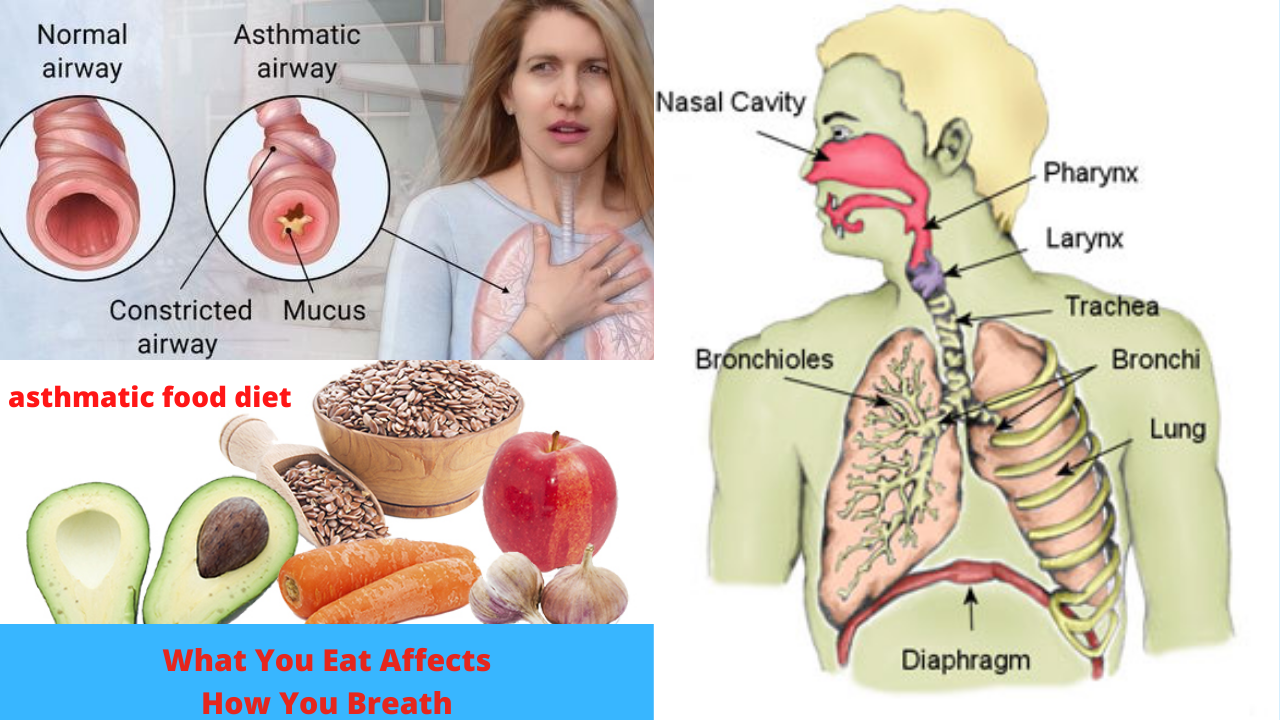
Is there a correlation between asthma and diet? Yeah, yeah. What you eat too much affects the working of your digestive organs-it affects everything. As a consequence, if one is trying to monitor the signs and attacks of asthma, this is the one aspect that must be closely considered.
Asthma is an inflammatory inflammation of the lungs, according to medical studies. In addition, pesticides, air pollution, pollen, molds, spores, animal dander, milk, exercise, and even temperature changes can cause an asthma attack.
However, mates, speaking from my experience with asthma from 7 to 20 years of age, the one aspect that I believe is the most adversely affecting on one’s respiratory and general wellbeing is what one eats.
This is a finding that has been successful in many initiatives aimed at improving respiratory fitness, such as the “Breath Control System for Asthmatics” created by Dr. Buteyko of Russia. After weeks after adhering to his counsel, many persistent asthmatics have been able to give up the use of ventolin inhalers.
Here, I never had to use his program; but in my attempt to get rid of acne, I came across a dietary improvement that miraculously healed my asthma, halitosis, and utter lethargy. Being astounded by how this shift in eating habits worked on not one, but all of my health issues, was what helped me study and learn that a system like his still existed.
“Oh, what’s the nutritional suggestion? “One may be wondering. Simply put, you have to give up all refined foods and animal products, such as beef, milk, eggs and the like, from your diet – pure and basic.
Two quotes come to mind in suggesting this: “You are what you eat” and “Let your diet be your medication and your medication your health.” Now, I ask you: “What is the biggest physical pollution that happens during an asthma attack with all the wheezing and coughing? “It is mucus.
Many of the foods mentioned above are extremely mucus-forming and, when digested (if ever digested), leave us with an unnecessary line of mucus and mucus. Bear in mind that the lungs are the most important excretory organs, when you add their work to this assumption, it is obvious that the ingestion of such compounds is, in essence, just havoc on the body.
In fact, from my own experience, < b > DO NOT Eat Beverages WITH YOUR MEALS at any time. This prevents digestion by diluting the essential juices in your stomach for this reason. As a result, it hinders the much-needed expansion of the diaphragm and, as a result, the constriction of the lungs – the bellows of life sustaining air – which results in a wheezing that every asthma patient is familiar with.
So, what do you do as an asthma patient?
Ok, foods that are just the same, mucus binding or non-mucus producing foods.
They’re all fruits and vegetables. Make sure they are safe if possible or at least not on the “dirty dozen” category, i.e. those most tainted with pesticides such as bananas, Mexican melons, strawberries, etc. Believe me; I’m talking from experience, you’re going to do very well to eliminate the fruits on that list when it comes to asthma. Nonetheless, you will also be much better off removing the food compounds identified as mucus-forming sooner.
Certain small factors can also be involved in natural asthma diagnosis, but diet is possibly THE factor to be closely controlled.
Know what you eat has an effect on how you breathe and how you breathe affects how you live.
 naturecures.fitness.blog